


#ArrestedForHunterGathering: Southwest Florida’s Palmetto Berry Crackdown Is About More Than Plants

Updated: Aug 5, 2025
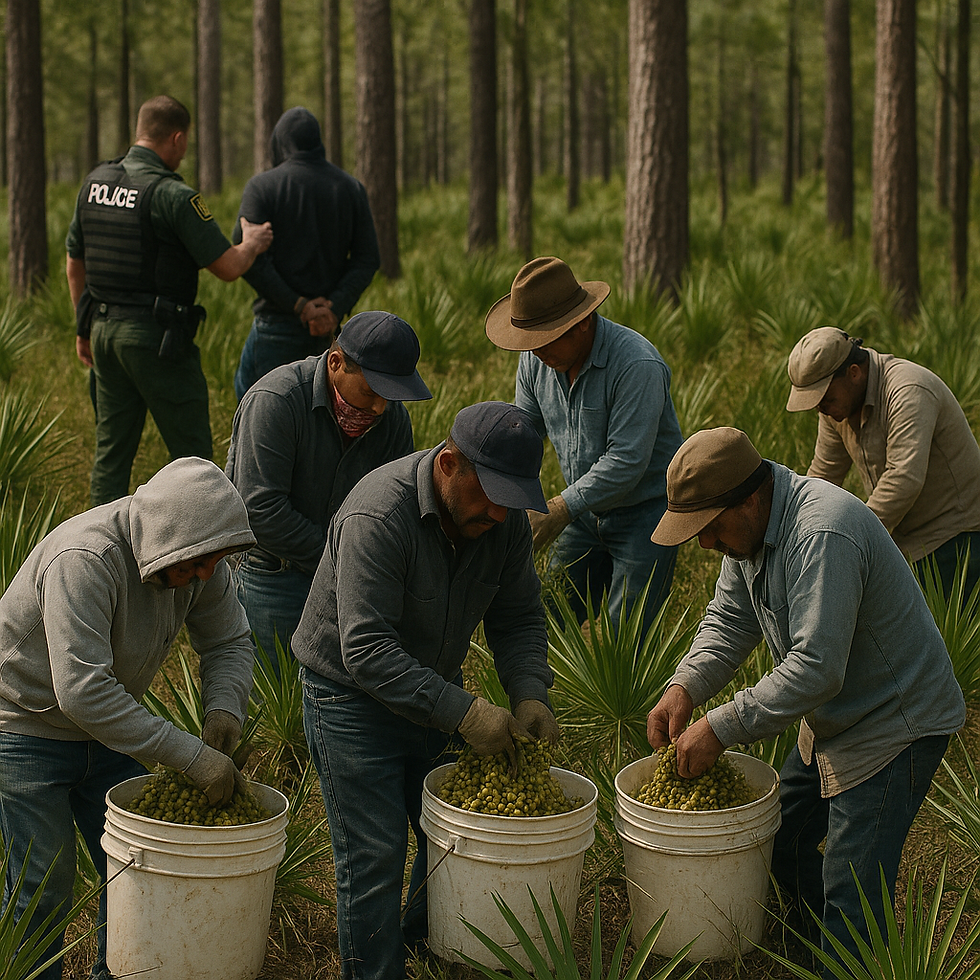
In Southwest Florida, palmetto berry season isn’t just about foraging—it’s become a high-stakes law enforcement sweep that merges environmental protection with immigration policing. From the pine flatwoods of Collier County to the wild heart of Big Cypress, the annual August–October harvest is now one of the few times you’ll see forestry officers, sheriffs, and even Border Patrol working the same beat.
It’s all happening against the backdrop of a state government that has embraced some of the harshest anti-immigrant policies in the nation. Under Governor Ron DeSantis, Florida has expanded cooperation between local law enforcement and federal immigration agencies, even deploying state resources to assist with mass deportation operations. With Donald Trump promising an even more extreme, nationwide mass deportation agenda if re-elected, immigrant communities in Florida are living under constant threat—often without due process. In this climate, laws meant to protect plants and wildlife can quickly become weapons against vulnerable people.
The Official Line
Florida law classifies saw palmetto berries as a commercially exploited plant. Since 2018, anyone picking them must carry:
A free harvest permit from the Florida Department of Agriculture and Consumer Services (FDACS)
Written permission from the landowner with exact dates and location
As of July 1, 2024, the stakes got higher: picking without those papers is now a third-degree felony—punishable by up to 5 years in prison.
On paper, it’s about conservation. Saw palmetto berries feed over 200 species, including black bears and wild turkeys. The plants grow painfully slow—about 1.2 cm per year—so overharvesting can take decades to reverse.
What Really Happens in Southwest Florida
The biggest “hot zones” in the region—Big Cypress National Preserve, the Fakahatchee Strand, and parts of Collier-Seminole State Park—are thick with berries and remote enough to hide large harvesting crews. During season, the Florida Forest Service and park rangers step up patrols, checking for permits and stopping vehicles on forest roads.
These checks often lead to arrests for trespassing, theft of natural resources, and sometimes immigration violations. In Collier County, a three-man sheriffs unit seized more than 30,000 pounds of berries in one season and made over 100 arrests. In nearby Hendry and Glades counties, pickers report “coincidental” visits from Border Patrol after forestry stops—especially in migrant-heavy communities.
The Immigration Connection
Palmetto berry harvesting is grueling, seasonal work that pays little. The labor force is overwhelmingly migrant, with many workers undocumented. For them, berry season is both a source of income and a risk: a permit stop can quickly turn into an immigration detention.
In practice, environmental rules give law enforcement a legal pretext to stop, question, and detain people deep inside forests where Border Patrol normally wouldn’t have a reason to operate. Forestry officers call sheriffs for backup; sheriffs sometimes call Border Patrol. The result? A resource protection law becomes part of a statewide—and increasingly federal—immigration dragnet.
This is unfolding at the same time Florida has passed laws criminalizing transportation of undocumented immigrants, mandating E-Verify for many employers, and allowing state police to arrest people for federal immigration violations. Immigrant advocates warn that due process protections are being eroded, with individuals funneled into deportation proceedings before they can access legal counsel.
Why Southwest Florida Should Pay Attention
Issue: Local law enforcement
Why It’s Significant: In rural SWFL counties, sheriffs often act as the primary enforcers, coordinating directly with forestry officers.
Issue: Immigration overlap
Why It’s Significant: Many arrests during berry season involve undocumented workers, making the environmental law a tool for immigration enforcement under a state government pursuing mass deportations.
Issue: Public lands and community trust
Why It’s Significant: Using conservation laws as an enforcement pretext undermines trust in environmental protection efforts and deters immigrant communities from engaging with public lands.
What You Can Do in Southwest Florida
If you care about conservation, immigrant rights, or both, you have a role to play in stopping the misuse of environmental laws as immigration tools.
Show Up Where Decisions Are Made
Attend Collier, Hendry, Glades, and Lee County Commission meetings when forestry and law enforcement partnerships are discussed. Ask for public reporting on when and why Border Patrol is contacted during resource enforcement.
Demand Transparency from the Florida Forest Service
Call or email the Florida Forest Service district office and ask how many permit checks during palmetto berry season lead to immigration referrals. Make it public if they refuse to answer.
Support Community Legal Defense
Donate to or volunteer with local immigrant support networks in SWFL. A felony charge for harvesting berries can lead to deportation—legal aid can mean the difference between staying with family or being removed from the country.
Document and Report
If you see forestry stops turning into immigration sweeps, record what’s happening and write down badge numbers, locations, and times. Share that with trusted advocacy groups before posting online.
Protect the Land Without Criminalizing People
Advocate for conservation policies that restore and protect saw palmetto habitat without targeting vulnerable workers. Support initiatives that pair habitat recovery with legal, fair-paying local jobs.
Quick Action Contacts
Florida Forest Service – Caloosahatchee Forestry Center (Fort Myers)
Phone: (239) 690-8000
Email: FFS.Caloosahatchee@FDACS.gov
Collier County Sheriff’s Office
Non-Emergency: (239) 252-9300
SWFL Immigrant Rights Coalition


Comments